

Our Team
Our team is a group of expert lecturers and researchers from diverse disciplines, combining technical innovation with educational expertise to advance inclusive and impactful learning.

Dr. Andrew Abel is a Chancellor’s Fellow in the Department of Computer and Information Sciences at the University of Strathclyde, based in the Human-Centric AI group. His research focus is on technical approaches to multimedia communication, with particular focus on machine learning, lip reading, and emotion recognition, strongly motivated by his own serious/profound hearing loss (he uses 2 hearing aids). Andrew received his PhD in multimodal speech communication from the University of Stirling, Scotland, and prior to joining Strathclyde in 2022, has previously worked at Stirling, been a visiting researcher at Anhui University in Hefei, China, and was also a lecturer at Xi’an Jiaotong – Liverpool University in Suzhou, China. He has a strong publication track record, focusing on deep learning for speech recognition, emotion recognition, and multimodal speech processing, as well as the fusion of different modalities to develop explainable and trusted machine learning, and has also supervised two PhD students to completion. He co-founded the Strathclyde Centre for Doctoral Training in Human Centred AI for Inclusion in Education and Society, and has several ongoing AI-focused projects, including projects on explainable multimodal speech processing with video and audio data. His current work also includes feature-based emotion recognition and the development of automated lipreading software.

Dr. Yuchen Wang is a Chancellor’s Fellow at the Strathclyde Institute of Education, University of Strathclyde. Her research interests include inclusive education, children and young people’s voices and participation, sustainable development, and technology. She has led several international and interdisciplinary projects funded by external bodies. She was a co-editor for the book ‘Artificial Intelligence and Inclusive Education: Speculative Futures and Emerging Practices’, which won the 2020 Springer Nature New China Development award. She was also a core member of the writing group which produced the latest version of Scotland’s ‘National Framework for Inclusion’.
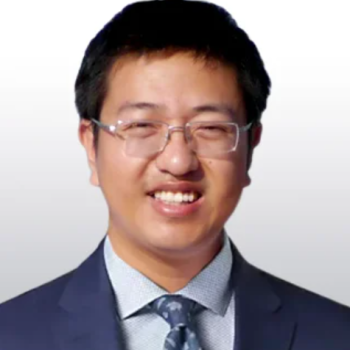
Dr. Laibing is a Senior Lecturer in Fluid Mechanics at the University of Strathclyde. His expertise is recognised in the areas of Fluid-Structure Interaction (FSI), bio-inspired propulsion systems, experimental and computational fluid dynamics (EFD and CFD), and data-driven engineering. His doctoral research, which focused on the interaction of flexible structures with fluid flows, was published by Springer as part of the Springer Theses series, which recognises outstanding Ph.D. research. His research experience was broadened through postdoctoral appointments held in China, the United States, and the United Kingdom. A Royal Society K.C. Wong Postdoctoral Fellowship was awarded to him and hosted at the University of Strathclyde. In 2019, he was appointed as a Lecturer and Chancellor’s Fellow at Strathclyde and was promoted to Senior Lecturer in 2025.
His research integrates experimental and computational approaches with analytical and data-driven methods, addressing interdisciplinary challenges in marine engineering, renewable energy, and bio-inspired systems. By investigating complex interactions among fluid flows, structural responses, and natural phenomena, I aim to enhance performance, efficiency, and sustainability in diverse engineering applications.

Ashwitha Devasya is a PhD researcher at the University of Strathclyde, under the supervision of Dr. Andrew Abel and Dr. Yuchen Wang. Her current work focuses on detecting student engagement in the classroom using various deep learning techniques.
Before her PhD, she gained valuable industry experience as a BI Developer, a role where she skilfully used data to create effective data dashboards that helped clients visualise and understand their information. While this was a rewarding experience that honed her technical skills, her long-term aspiration of becoming a lecturer and her passion for research ultimately drew her back to academia. Her academic journey includes MSc in Advanced Computer Science with a focus on Big Data at the University of Strathclyde, further solidifying her passion for leveraging data-driven solutions to address real-world challenges, particularly in education. Her current research is particularly exciting to her as it merges her expertise in machine learning with her profound passion for enhancing educational outcomes.


I’m a PhD researcher at the University of Strathclyde, investigating how AI can be used to support inclusive education, particularly for learners with diverse needs. My academic background includes an MPhil in Leadership in Education from LUMS, where I focused on equity in educational access. Over the past decade, I’ve held leadership, teaching, and teacher training roles across a range of contexts, including low-cost schools in Pakistan and higher education institutions. As a teacher trainer with Oxford University Press, I’ve delivered professional development workshops that improved classroom practice and learner outcomes.
In 2025, I’ve been selected to conduct a workshop as part of the Hot Topics series at the BERA Conference. My session, “Optimising AI for Equitable Inclusion: A Qualitative Case Study of Scottish Teachers’ Perspectives,” is a significant opportunity to represent my PhD research and engage directly with teachers to gain first-hand insights. My work is grounded in both practice and research, shaped by a commitment to educational justice and innovation.
